
Preserving Heritage in the Face of a Changing Climate
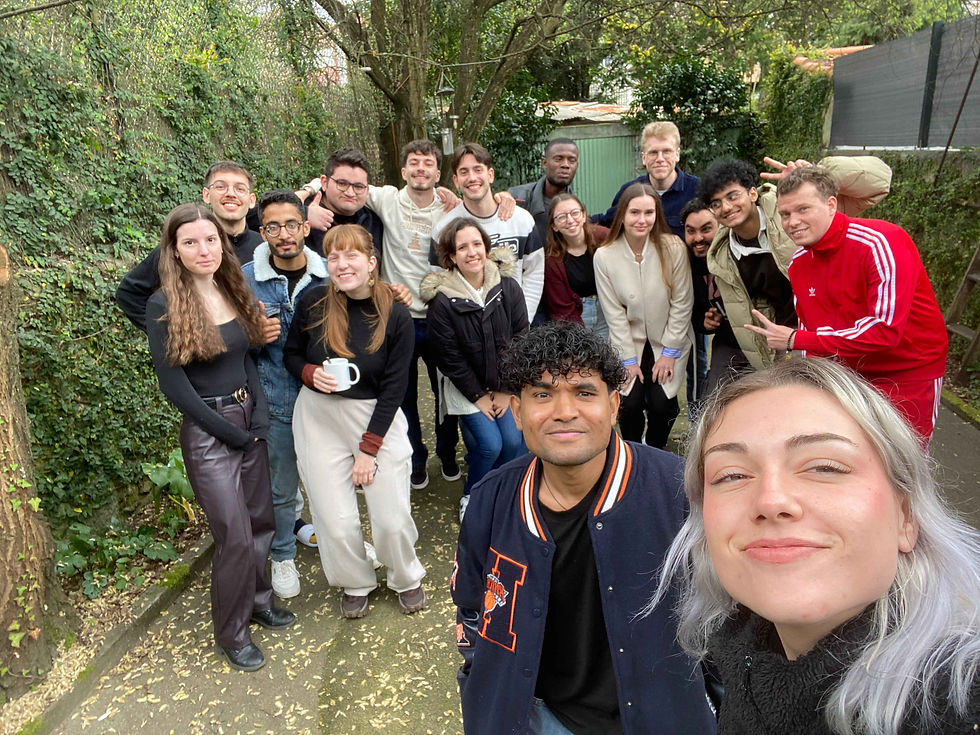
Our French has returned from an extraordinary journey to the "Eternal City" - Rome, Italy after a week of intensive participation from 2-10 February, 2025 . As an official partner of the Erasmus+ project "Rooted In Unity," we joined forces with participants from Italy, Azerbaijan, Hungary, Greece, Ukraine, and Portugal. In a city where every cobblestone tells a story, we spent seven days exploring the fragile intersection between our ancient past and our environmental future.
Why Rome is the Ultimate Classroom for Climate Change
Rome is one of the oldest continuously occupied cities in Europe, a sprawling museum of human achievement. However, its anciency makes it uniquely vulnerable. In the 21st century, the climate crisis isn't just a threat to our future, it is a threat to our history. Rising temperatures, extreme weather, and pollution are physically eroding monuments that have stood for millennia. For today’s youth, Rome serves as a stark reminder: if we do not address climate change, we lose the physical evidence of our collective identity. This project empowered our participants to see heritage not as "old buildings," but as a living legacy that requires urgent protection.
Tangible vs. Intangible: Understanding Our Inheritance
To protect our roots, we first had to define them. We spent time distinguishing between the two pillars of culture:
Tangible Culture: These are the physical artifacts, the Colosseum, the Roman Forum, and ancient sculptures. They are important because they provide a concrete link to our ancestors' engineering and artistry.
Intangible Culture: This includes the "invisible" traditions, oral histories, social rituals, traditional music, and even the "Art of the Aperitivo." These are vital because they carry the spirit, values, and social fabric of a community.
While tangible sites are at risk of physical decay, intangible culture is at risk of being forgotten. Both are equally essential to our sense of belonging.
The Public Debate: Restoration or Innovation?
One of the most thought-provoking parts of our week was a deep dive into the public debate on heritage spending. We tackled a difficult question: In a world with rising poverty and housing crises, should governments spend millions on restoring stone monuments? A question circling through French public for some time now making it highly relevant to our society as well. Through debates and interviews with Roman locals, we explored the idea that protecting tangible culture is an investment in our future. Heritage is a primary driver of tourism and local economies, but more importantly, it provides the "cultural ecosystem" that keeps a society unified. We learned that restoration isn't just about cleaning marble, it’s about preserving the "roots" that keep a community stable during times of crisis.
Guardians of the Eternal City: The Agenda
Our participants didn't just study history; they engaged with it through powerful, non-formal activities:
Public Interviews: We took to the streets of Rome to interview locals about how they perceive the effects of global warming on their city’s landmarks and whether they knew about the support provided by Erasmus+.
Intercultural Night: We shared the stage to spotlight French traditions, building a bridge between our own intangible culture and those of our European neighbors.
Digital Advocacy: By creating digital content and "Future Self" letters, participants reflected on their personal growth and committed to being lifelong advocates for sustainability.
Continuing the Legacy
The creativity and spirit of our French team shone through every activity. They return to the country not just with photos of the Colosseum, but with a mission to protect both the nature and the culture that define us. Rome has been standing for thousands of years, it is now up to us to ensure it and our own local heritage stands for thousands more.
This project is funded by the European Commission. The European Commission is not responsible for the results or the content of this post.
#France #ErasmusPlus #YouthExchange #Sustainability #CultureAndClimate #Rome2025 #Youthpass #RootedInUnity #JeunesseActiveDeRouen #HeritageProtection #ClimateAction #EternalCity #JeunesseActivedeRouen #ActiveYouthofRouen


Comments